
The Triassic Cuddle; The Oldest Hug in History
A glimpse into my favourite fossil of all time

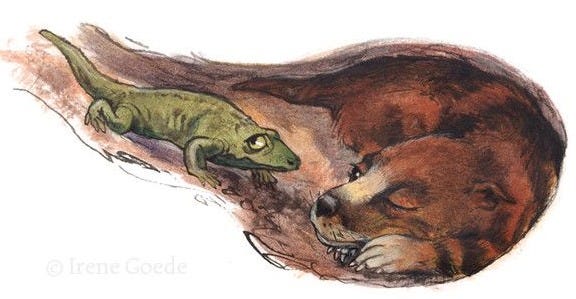
250 million years ago, a Thrinaxodon— a ferret shaped carnivorous animal— curled into the darkness of an underground burrow he’d carved out for himself as a scorching heat wave took over outside.
He settled inside, preparing to estivate, which is a kind of deep sleep similar to hibernation except it happens in hot climates instead of cold.
Sometime later, another creature finds the burrow.
The Broomistega, a small semi-aquatic amphibian relative. His food was mainly algae and he was pretty much useless on land.
In a normal scenario, he would have been easy pray for the Thrinaxodon. And that would have been a very fast uneventful end to our story.
Instead, the little Broomistega crawled into the burrow, fear and desperation driving him inside.
He had several partly healed broken ribs, putting him in a lot of pain. He could hardly breathe, and walking must have felt like dragging himself through glass. So, to escape the searing hot air outside, that’s where his little injured paws led him.
There’s a lot of theories on how this story goes. How I imagine it is; the Broomistega was desperate for the closest refuge, and the Thrinaxodon half asleep half guarded suddenly found his sanctuary disturbed by the small whimpering animal.
What neither of them knew?
Time, place and their shared instinct to hide in the same spot was the exact thing that sealed their fate.
Not long after, a huge mud flood comes rushing down.
It pours into their dark safe haven, filling it up and drowning them together.
In those final moments, their instincts didn’t matter.
Instead, they held on to each other.
When palaeontologists found them millions of years later, the Thrinaxodon’s back was curved against the wall and the Broomistega was pressed almost on top of him, sharing their last breath together in the only way two terrified creatures knew how. They died and fossilized together, a prey and a predator.
Immortalized for eternity in stone.
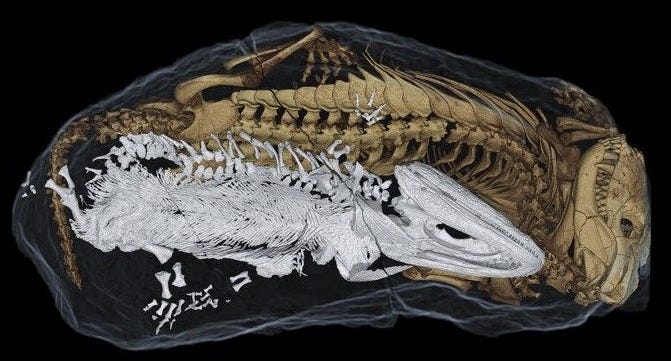
There’s something so tragically human about this fossil, that kept me thinking about them. Two creatures who should’ve feared each other, pressed against one another because the world outside was harsher than whatever danger they posed to each other.
Maybe they didn’t choose to be there, maybe they were too tired, one was too injured, the other too sleepy. Both of them were too alive to follow the rules nature gave them though, because fear does strange things to the living. We reach for whoever is closest, even if they could have hurt us. Even if they should have.
In the end it didn’t matter, did it?
The mud still came. Darkness still closed up on them, and there they were, curled into one another the way humans do when life becomes too much to bear.
A hunter and hunted, dying like two people who never meant to need each other, but did anyway. Because they didn’t survive, but they didn’t die alone either.
And how beautifully tragic is that?
This is fascinating, especially the quiet tension between instinct and survival in such an extreme moment. The way you frame vulnerability overriding predator and prey roles makes the story feel strangely intimate and human.
What do you think this moment says about how crisis can suspend natural rules and force unlikely forms of coexistence?
Beautiful piece as usual 🤍